






Countries With More Than One Capital
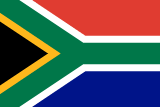
South Africa has three capitals. Bolivia has two. Here's every country that splits its capital functions between cities.
Countries That Can't Pick Just One Capital
Most people assume it's simple: one country, one capital. But a surprising number of nations divide their governmental functions between two or even three cities — each technically a "capital," just for different purposes.
South Africa: Three Capitals
South Africa is the most extreme example. It has three official capitals, each hosting a different branch of government:
Pretoria — The executive capital. This is where the President and the cabinet work, and where most foreign embassies are located. When people say "the South African capital," they usually mean Pretoria.
Cape Town — The legislative capital. Parliament — the National Assembly and the National Council of Provinces — sits here. The contrast between Pretoria (administrative, Afrikaner-dominated inland city) and Cape Town (parliamentary, cosmopolitan coastal city) reflects South Africa's complex political geography.
Bloemfontein — The judicial capital. The Supreme Court of Appeal is based here.
The three-capital system dates back to the 1910 Union of South Africa, designed as a compromise between the British Cape Colony (Cape Town), the former Boer republic of Transvaal (Pretoria), and the Orange Free State (Bloemfontein).
In the World Capitals Quiz, Pretoria is the accepted answer for South Africa, as it is the executive capital and the seat of most international relations.
Bolivia: Constitutional vs. Seat of Government
Bolivia presents a historically loaded case:
Sucre — The constitutional capital, named in Bolivia's 1825 founding documents. The Supreme Court of Justice is based here, and Sucre is recognized as the legal capital under the constitution.
La Paz — The seat of government, where the president, the National Assembly, and virtually all government ministries operate. La Paz has been the functional capital since 1899, when a civil war ended with Sucre losing its role as the governmental center.
La Paz also holds a world record: at 3,640 meters (11,942 feet) above sea level, it is the world's highest-altitude seat of government. In our quiz, Sucre is the accepted answer, following the constitutional designation.
The Netherlands: Amsterdam vs. The Hague
The Netherlands has a clear constitutional capital (Amsterdam), but the city has never functioned as the seat of government. The Dutch parliament, all ministries, the Supreme Court, and the Council of State are all located in The Hague (Den Haag). Most foreign embassies are in The Hague as well.
Amsterdam is the official capital under the Dutch constitution, the seat of the monarchy, and where the king's annual speech to parliament takes place — but all actual governing happens 60 kilometers away.
Other Notable Cases
Côte d'Ivoire — Yamoussoukro became the official capital in 1983 by presidential decree of Félix Houphouët-Boigny, who was born there. However, Abidjan — the former capital and the country's largest city — remains the functional administrative and commercial center.
Myanmar — Naypyidaw is the official capital since 2005, but Yangon (Rangoon) remains the economic center. The military government relocated the capital abruptly, reportedly based on astrological advice.
Benin — Porto-Novo is the official capital and seat of the legislature, but Cotonou is the seat of the government and the largest city. Most embassies are in Cotonou.
Tanzania — Dodoma became the official capital in 1996, taking over from Dar es Salaam. However, many government functions and most embassies remain in Dar es Salaam.
Test Your Knowledge
These multi-capital edge cases are favorite traps in competitive geography. Do you know which city is the "accepted" answer in each case? Play the World Capitals Quiz →